Iain Schmitt
Photography
My first proper digital camera was a Canon Rebel T1i. It was the type of camera you'd buy a photography-curious highschooler for Christmas if it was 2010, but I got my hands on one almost a decade later in 2019. The camera was a Craigslist find from one of my sisters, but she didn't get enough use to justify keeping it. When I was home one weekend in May that year she asked if I would take it off her hands, and I left with first DSLR.
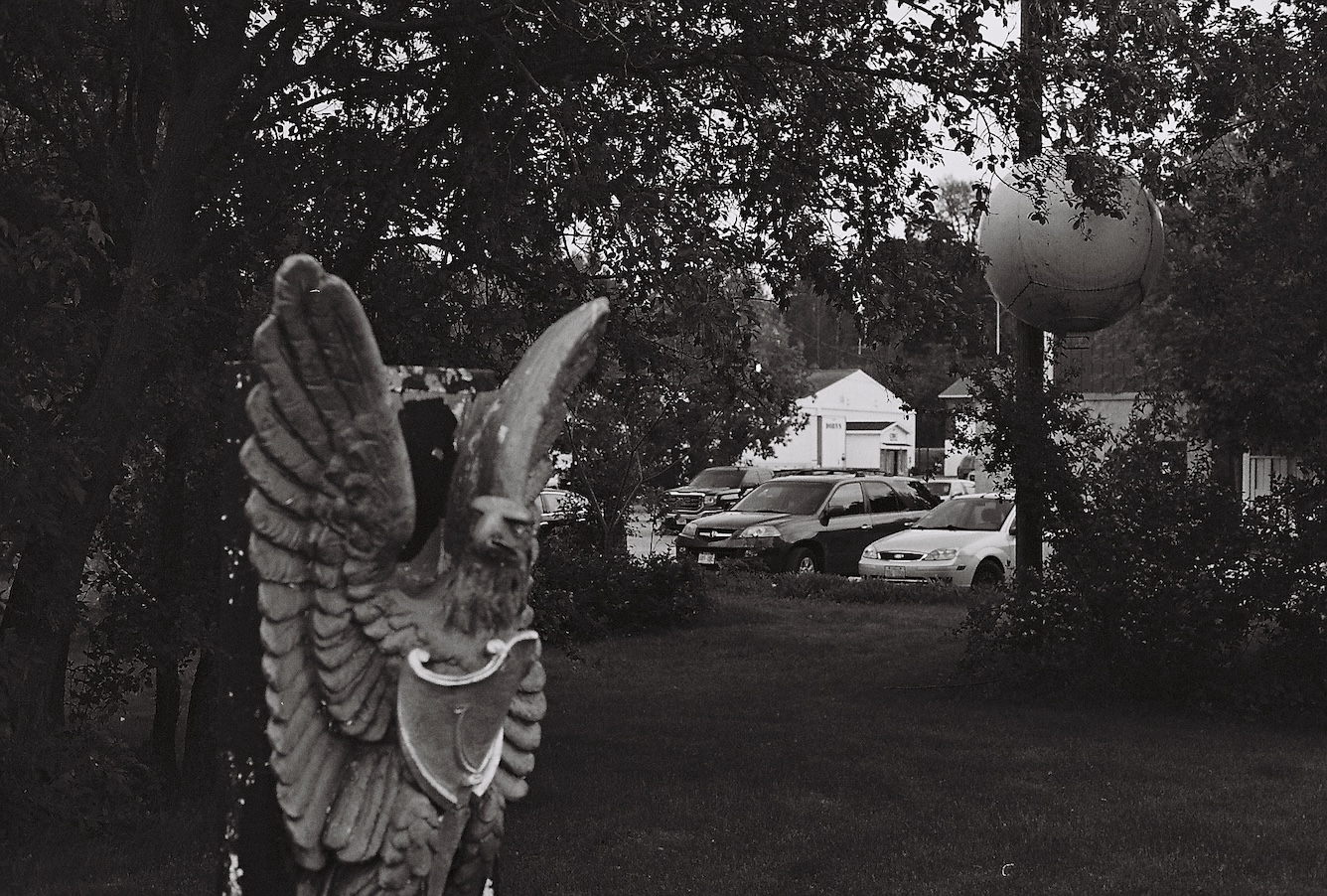
Despite being born in the late '90s, I had a film camera before the Rebel. A few years before I received a Canon AE-1 as a birthday gift during what felt like a mid-2010s film photography resurgence. This was the camera that taught me the basics of photography; I shot many blurry or underexposed photos while getting to grips with how shutter speed, aperture, and ISO impacted a shot. Luckily the AE-1 has a light meter onboard: when partially pressing down on the shutter button the viewfinder shows the most appropriate aperture. According to my dad this made shooting film a lot easier; he told me stories of consulting paper charts and a standalone light meter to get the same information, which sounds unwieldy.
To be honest the 'against the grain' nature of film photography was part of the appeal. This confused many people in my life who lived through the inconveniences of film photography (carrying film, paying for each photo, or losing undeveloped rolls due to mechanical mishaps) and didn't understand why anyone would willingly subject themselves to that when point-and-shoot cameras were getting better and cheaper every year. Admittedly getting the Rebel T1i made me understand that sentiment, because I could finally heed the commonly given photography advice of 'take more pictures’.
From January to August in 2019, I worked as a co-op Chemical Engineer in training in Appleton, Wisconsin. A few people in the office were good photographers and taught me a thing or two about my new-to-me DSLR that summer, and one of them gave me a good deal on my first fixed focal-length lens that I used for several years. At 80,000 people Appleton isn't a small town, but I knew few people outside of work and had a lot of time on my hands. So I spent a lot of time taking many mediocre photos with both cameras on my path to becoming slightly better.
I returned to Minneapolis that fall to finish my final three semesters at the University of Minnesota. I didn't find much time to shoot during that semester, but much of that had to do with being back on campus with my friends and my then girlfriend, now wife. The next time I thought about either of my cameras was when classes moved to Zoom after spring break in March of 2020. We didn't know it yet, but despite being over a year out from graduation I already had my final in-person college class. This was far from the most important supply chain crunch in the early pandemic, but global webcam production was not exactly sufficient for the literal millions more people who needed one for remote class or work that spring. At this time there were a couple of Reddit posts going around explaining how to make older Canon DSLRs work as a webcam. The setup was somewhat flaky and required running a constantly running program on the computer you connected to, but it worked well enough and became part of my remote class setup:
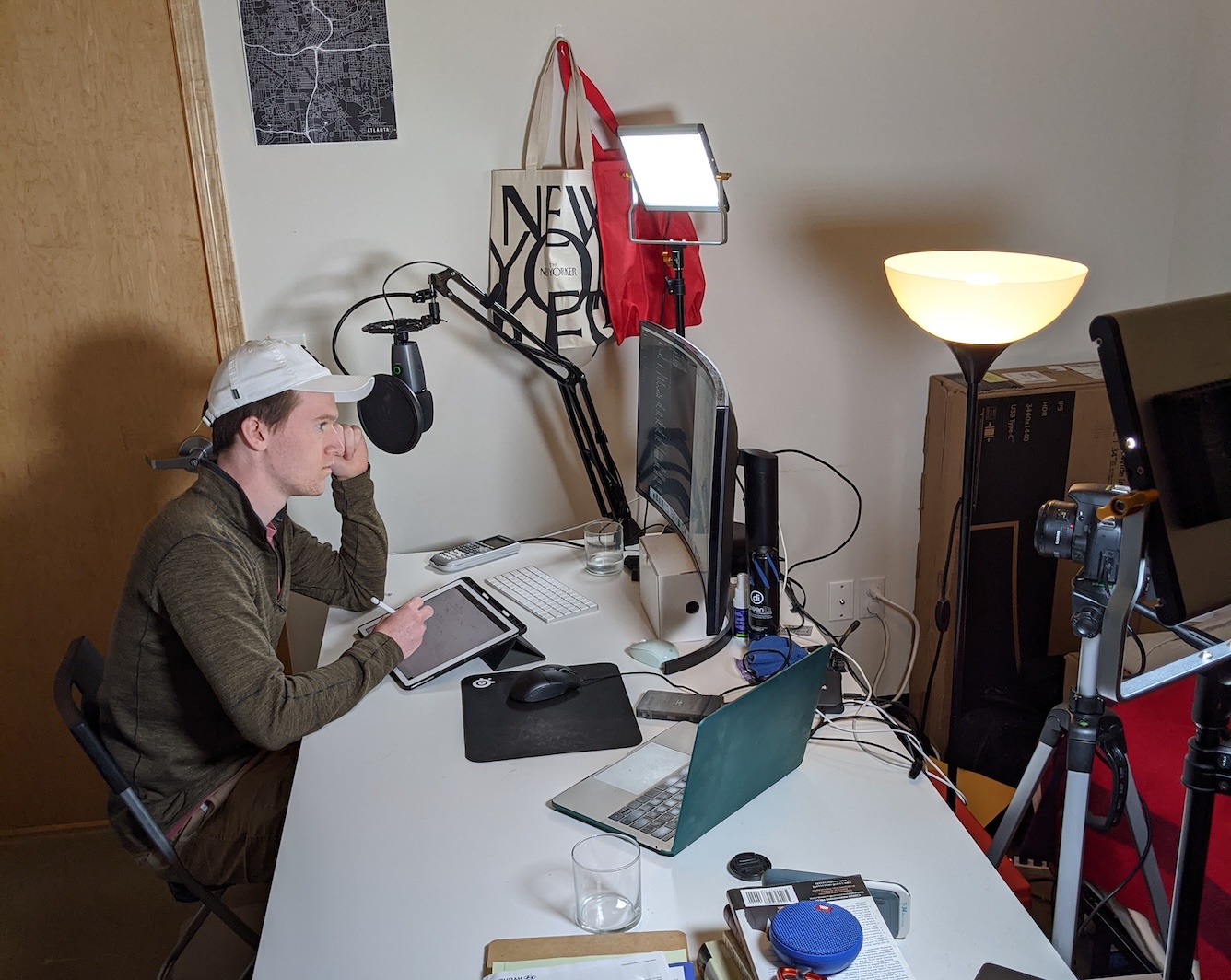
Unfortunately for my wallet, I was hooked. Even once you could get a decent webcam in 2021, I had gotten used to the professional look of a digital camera as webcam. But the less than reliable drivers were getting old, so I upgraded to a Canon M50 Mk II. This could more reliably be used as a webcam because it provided an HDMI output without any camera controls on it, so all you need is an HDMI capture card to connect it. This is the camera that I did my senior year job interviews with, and to this day I occasionally get a 'do you have a podcast?' or 'are you a streamer?’ when on a video call.1
Given that I'm probably not out shooting photos if I'm on a video call and vice versa it doesn't make sense to have a second digital camera, but "camera as webcam" was starting to win out over "camera as actual camera". Detaching the camera to shoot required unscrewing it from a desk mount, and when reattaching it I normally didn't get it where I liked it to be on video. It was of course worth the hassle for international trips, where I always shot enough to make me glad I brought the M50. But there were enough times I regretted leaving the camera behind that this year I bought a tripod head for my desk that connects to a quick-release plate at the bottom of the camera. I loosen one dial, remove the HDMI cord, and replace the AC powered dummy battery with a real one to shoot. When I come back it takes me 15 seconds to undo the process and my camera is right where I want it to be for video calls.
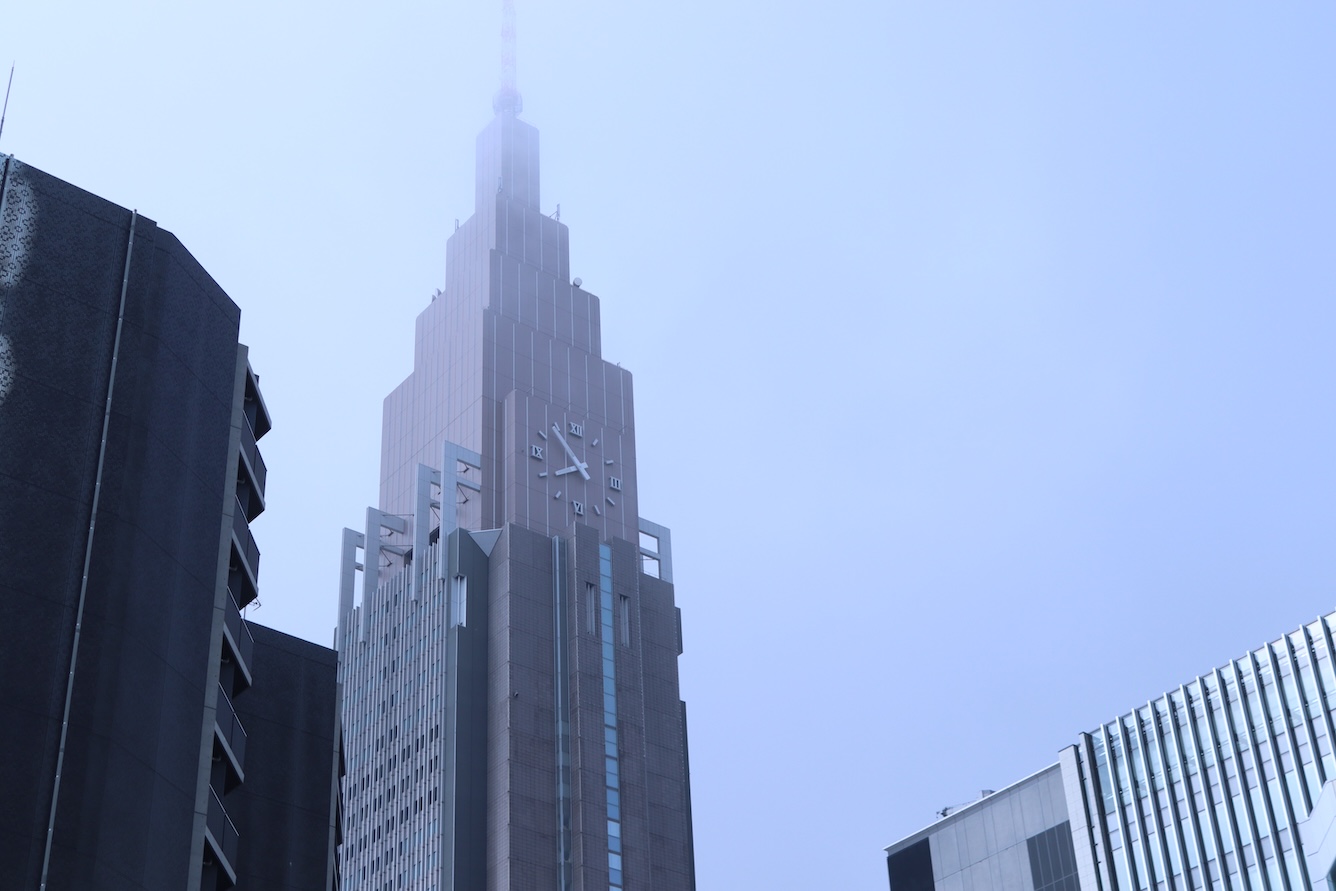
I wouldn't say I'm a great photographer: I don't edit my photos, my white balance is on automatic, and I shoot JPEG rather than uncompressed RAW files which are better for editing. A real photographer would teach me a lot if they saw me shoot for an afternoon or went through my camera settings. I've taken more photos since our honeymoon last year, and it has made me think about taking a class or doing other structured learning. But a decent handle on the basics can take you pretty far. Understanding the 'exposure triangle' relationship between shutter speed, aperture, and film speed as well as the rule of thirds and some intuition about visual balance of photographs is enough knowledge to take better photos after only an hour or two. I'd rather invest time in getting more out of my existing camera and lenses than investing in better equipment; I seldom feel that my gear is holding me back. My camera has a smaller cropped sensor than what you'd see in a flagship digital camera and I still use the kit lens from the Rebel T1i, but I'd have to have a good reason to upgrade to a better camera body.
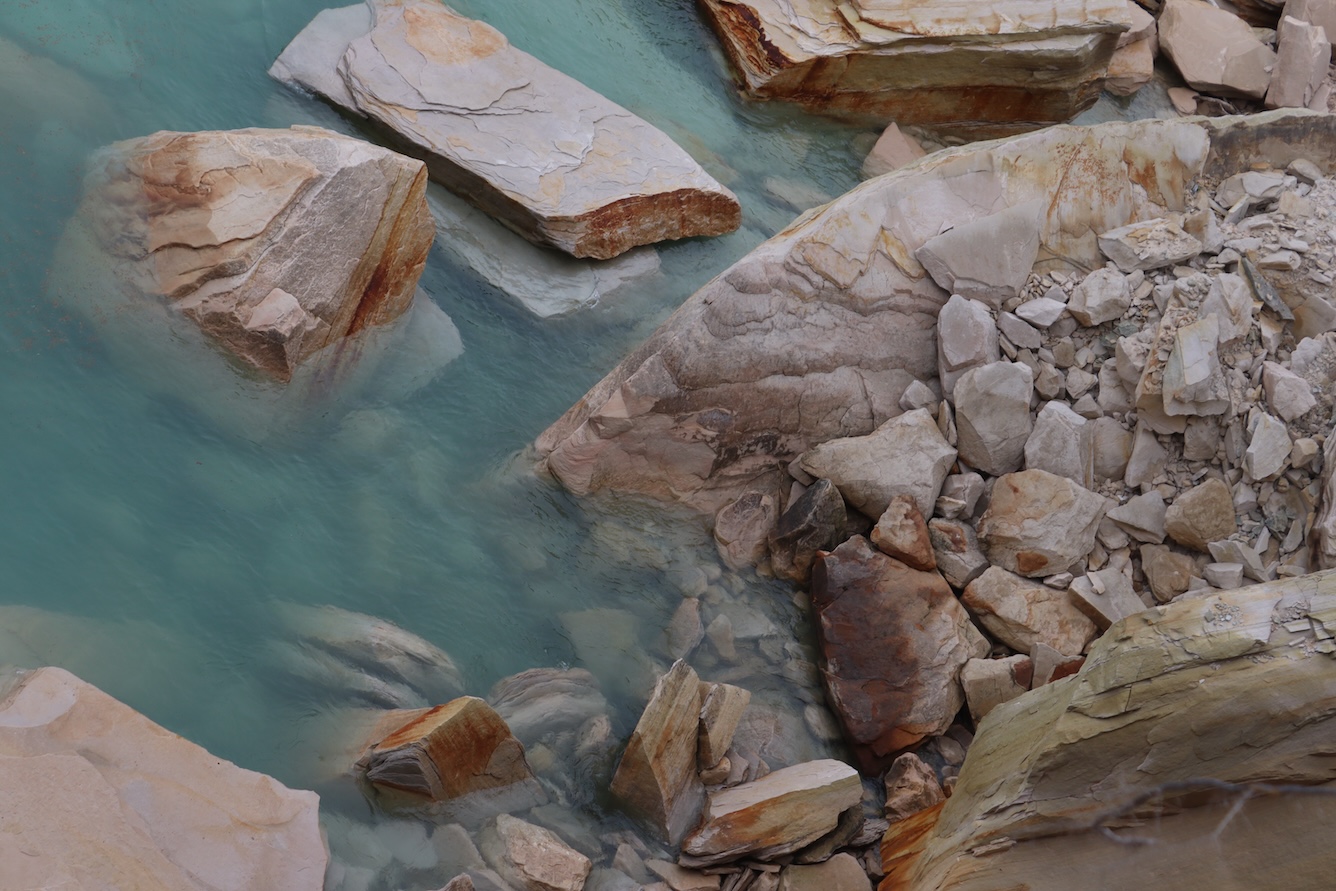
Photography is a great travel activity: exploring a new place on foot is fun, but it is nice to have something to show for it and a way to jog your memory about a past trip. I brought the M50 on a Memorial Day trip to the Upper Peninsula of Michigan this year, where I took the picture below. The shot is one of my favourite photos, but I wasn't looking through the camera when I took it. The rocks below were about 200 feet down the cliff I was standing on, and the cliff's edge looked a little sketchy so I held the camera out over the ledge and blindly pressed on the shutter.
Most people in technical disciplines should have some creative outlet, and you can do a lot worse than photography.
-
Given the reputation of podcasts and streamers, some may say this as a backhanded compliment↩︎